
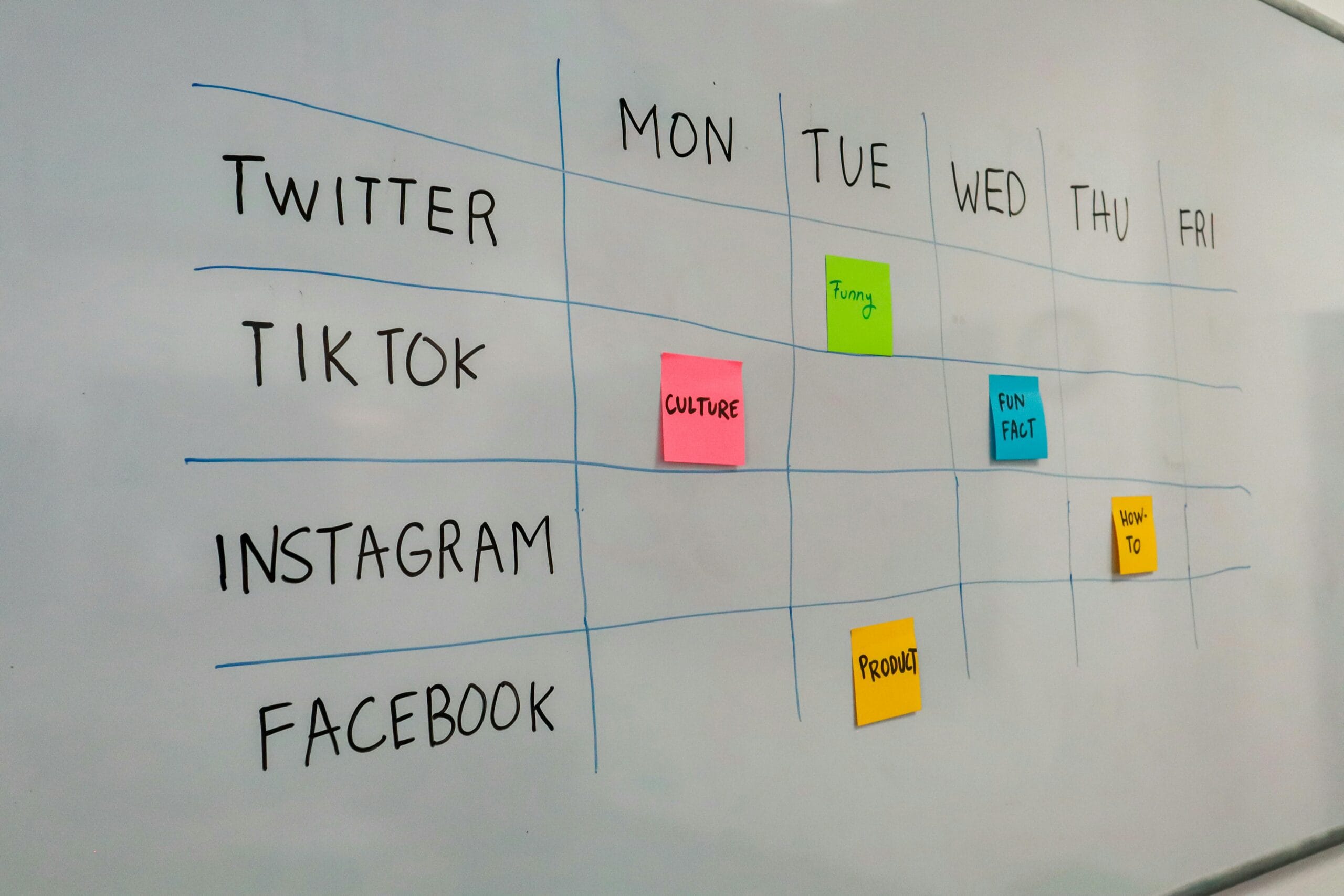
Most brands do not have a social media problem. They have a consistency problem. Posts go out when someone remembers, the tone changes depending on who is holding the phone, and nobody can quite say what any of it is meant to achieve.
A content strategy fixes that. It turns scattered posting into a plan with a purpose, so every post is pulling in the same direction and working towards something you actually care about. Here is how to create one from scratch, in eight practical steps.
The short version
A social media content strategy is a plan that sets out what you post, where, when and why. To build one, start with goals tied to real business results, audit your current presence, get clear on who your audience is, choose a focused set of platforms, define a few content pillars, map it all into a calendar, create content that sounds human, then measure and adjust. Strategy comes before tactics. Get the thinking right and the posting gets far easier.
1. Set goals tied to business outcomes
Every good strategy starts with a simple question: what is this actually for? Vague ambitions like “grow our following” will not help you. A goal only does real work if you can draw a straight line from it to a business result, whether that is enquiries, sign ups or sales.
A useful discipline is one main goal per platform, per quarter. Two at most if you are focused on a single channel. Any more than that and your content ends up pulled in different directions, doing several jobs badly instead of one job well. Content built to grow brand awareness looks very different from content built to drive email sign ups, so pick the outcome first.
Then attach a number to it. Your goal is the outcome you want. Your key performance indicator is the measurable part that tells you whether you are getting there. “Increase enquiries from Instagram by 20 per cent this quarter” gives you something to aim at and something to check against.
2. Audit what you already have
Before you plan anything new, look honestly at what you have got. Which platforms are actually earning engagement and traffic? What kind of posts keep landing, and what falls flat every time? Are there old accounts sitting dormant, quietly doing nothing for your brand?
A quick audit answers all of this and shows you where to double down and where to cut your losses. If a channel is not delivering, either change how you are using it or move that energy somewhere your audience already is. You will often find a couple of surprises here, formats you assumed were working that are not, and quiet performers worth building on.
3. Get to know your audience
You cannot create content people care about until you understand the people you are creating it for. Look at who is already engaging with you, then go deeper: what do they want, what problems are they trying to solve, and where do they spend their time online?
Your existing platform analytics are a goldmine for this, showing you age, location, active hours and the posts that earn the most saves and shares. Saves and shares matter more than likes, because they tell you a piece of content was useful enough to keep or worth passing on. Pay attention to the comments too. The language your audience uses is often the exact language you should be writing in.
4. Choose your platforms, and be ruthless
You do not need to be everywhere. You need to be where your audience is, doing that well. Spreading a small team across six platforms almost always produces six mediocre feeds. Focusing on two or three produces channels that actually perform.
Before you commit to a platform, ask a straightforward question: does the team have the bandwidth to create genuinely good content for it, consistently? If the honest answer is no, it is not the right platform yet. Match the channel to your audience and your goals rather than to whatever feels most popular this month.
Building all of this while running a business is a lot. If you would rather hand it over, our Organic Social team can take care of the strategy, content and day to day posting for you. Book a free consultation.
5. Build your content pillars
Content pillars are the handful of core themes you talk about again and again. They keep your feed focused and stop you staring at a blank calendar every week wondering what to post.
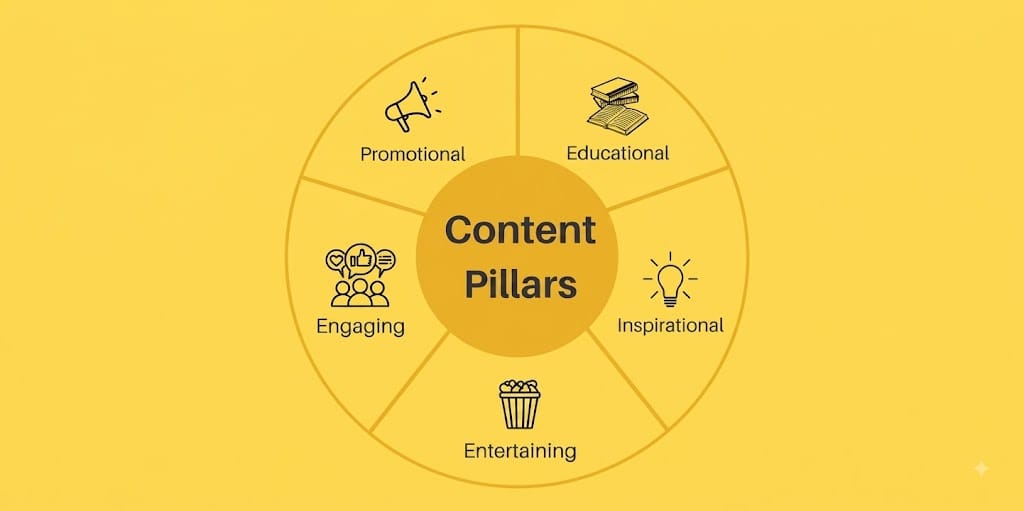
Most brands do well with three to five pillars. A local fitness studio might use client transformations, quick technique tips, behind the scenes moments and community events. Each pillar should support a goal and speak to something your audience cares about. Once your pillars are set, coming up with individual posts becomes far quicker, because you are filling in a framework rather than inventing from nothing every time.
A helpful way to balance them is to think in three outcomes. Growth through discoverable, search friendly formats. Consideration through educational and comparison content. Retention through community moments and partnerships. A mix like this keeps you from leaning too hard on any one type of post.
6. Map it into a content calendar
A content calendar is simply a scheduled view of what you are posting, where and when. It is the difference between a strategy that lives in your head and one that actually happens.
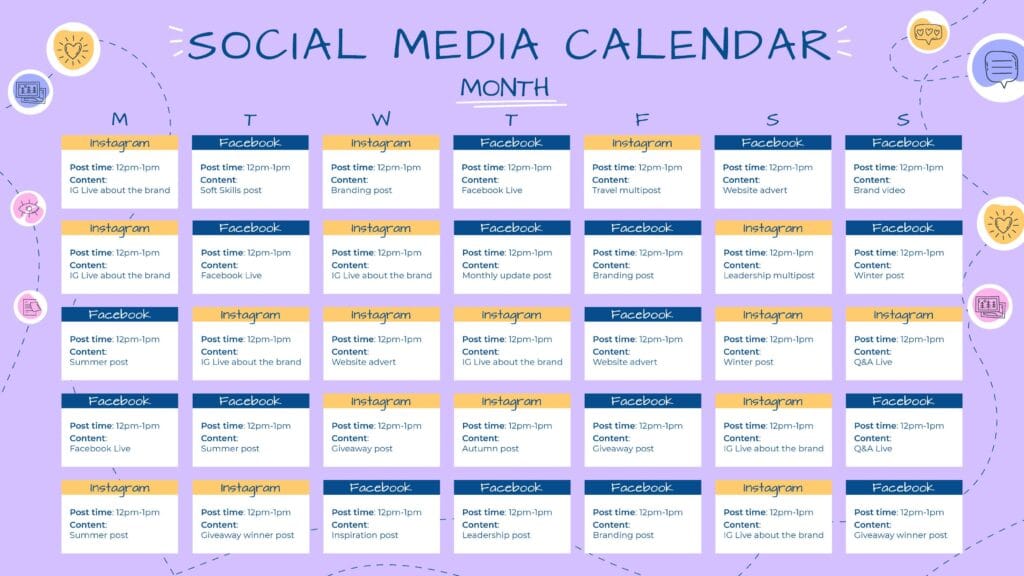
Plan formats as well as topics. Short vertical video continues to dominate reach across TikTok, Instagram Reels and YouTube Shorts, and algorithms reward watch time, comments and shares, especially shares into private messages. Build a realistic cadence you can sustain. Posting three strong times a week beats posting daily for a fortnight and then vanishing. Consistency is what algorithms and audiences both reward, so protect it by planning ahead and, where it helps, batching your content in advance.
7. Create content that sounds human
This is the part that separates brands that grow from brands that blend in. As AI fills every feed with faster, cheaper, endless content, the accounts that stand out are the ones that feel unmistakably human. Human made content still outperforms fully AI written content on every major platform, because people can tell the difference and they engage with what feels real.
That does not mean ignoring AI. Use it where it removes friction: brainstorming angles, drafting caption variations, repurposing one idea across formats. Just do not let it write the bits that make your content sound like you. A good rule is to draft with AI but never publish straight from it. Lead with a strong hook in the first few seconds or the first line, keep your brand voice consistent, and give people a reason to respond. The goal is connection, not volume. If you also run paid campaigns, the same balance applies to AI driven targeting, which we cover in our guide to using AI in Facebook Ads.
8. Measure, learn and adjust
A strategy is not something you set once and forget. Check your numbers regularly, monthly is a sensible rhythm for most brands, and let the results guide what you do next.

Focus on metrics that map to your goals rather than flattering ones. Follower count on its own is a vanity metric: it looks good and tells you very little. Reach and impressions show awareness. Comments, shares and saves show engagement. Website traffic, leads and attributed sales show conversion. Track the ones tied to the goal you set in step one, double down on what works, and quietly retire what does not. Over time this loop is what turns a decent strategy into a genuinely effective one.
Common mistakes to avoid
- Chasing every trend. Trends can work, but only when they fit your brand. Forcing them looks awkward and erodes trust.
- Posting inconsistently. A quiet feed signals a quiet business. Sustainable and steady beats intense and short lived.
- Measuring the wrong things. If a number does not connect to a goal, it is a distraction.
- Sounding like everyone else. Generic content is invisible content. Your point of view is the advantage.
- Trying to be on every platform. Fewer channels, done properly, will always outperform a thin presence spread everywhere.
Frequently asked questions
Expect early signs of engagement within a few weeks, and clearer momentum on awareness and traffic within three to six months of consistent posting. Social media rewards patience, and organic growth compounds steadily rather than arriving overnight. Paid campaigns can speed things up when you need to reach faster.
No. Organic social costs time and consistency more than money, and a focused effort on one or two platforms will outperform an expensive scattergun approach every time. A budget helps you scale what is already working, through paid promotion or better production, but it is not what makes a strategy succeed. Start with clarity and consistency, then put money behind the content that earns traction.
Organic social is the content you post for free to your own followers, building trust and community over time. Paid social is advertising you pay to place in front of a targeted audience, which delivers faster reach and is easier to attribute. Most brands need both: organic to build credibility and keep existing followers engaged, paid to reach new people quickly. They work best together rather than as an either or choice.
The strategy is the thinking: your goals, audience, platforms and content pillars. The calendar is how that thinking gets scheduled into real posts across the week and month. You need both. The strategy tells you what to create and why, and the calendar makes sure it actually happens.
Getting started
A strong social media content strategy is not complicated, but it does take intention. Set clear goals, understand your audience, focus your platforms, plan your content and keep a close eye on what the numbers are telling you. Do that consistently and your social media stops being guesswork and starts being a reliable driver of growth.
If you are ready to grow your organic social presence, build a community that genuinely engages, or turn social media into a real driver of growth, partner with the specialists at Brand Amp.
- Email us: hello@wearebrandamp.com
- Call us: +353 86 1655 249